 By Admin
Imagine this: you pour thousands into social media ads, content marketing, and email campaigns, only to see your reports crediting every sale to that final Google search click. You know the truth, your customers bounce between channels, researching on their phone during lunch, reading your blog on their laptop at night, and finally converting via an email link on their tablet. Yet your analytics insist the last touch wins all the glory, leaving you scratching your head about where to allocate next quarter’s budget. Sound familiar? You’re not alone. In today’s fragmented digital landscape, where the average customer interacts with 8-10 touchpoints before buying, sticking to outdated methods wastes up to 47% of your marketing spend. As a marketing manager or CMO at a mid-sized B2B firm, you feel the pressure to justify every dollar, especially with economic uncertainties looming. But what if you could map those invisible paths, value each interaction fairly, and boost your ROI by 15-20%? That’s the power waiting for you, and it’s time to break free from the guesswork.
Multi-channel attribution 2026 represents the evolution of tracking customer journeys across platforms, assigning fractional credit to each touchpoint that influences a conversion. Unlike simplistic models that ignore the full picture, it incorporates multi-touch attribution (MTA), data-driven attribution, and cross-device tracking to reveal how marketing silos interconnect. Why does this matter? In a world where privacy regulations limit signals and AI reshapes analytics, understanding touchpoint valuation and conversion path analysis helps you optimize ROI, eliminate waste, and align teams around real business outcomes. You’ll learn the pitfalls of traditional approaches like last-click, explore proven models for fractional credit distribution, discover implementation roadmaps, and get tips on tools for marketing mix modeling (MMM) integration. By the end, you’ll have actionable insights to transform your strategy, whether you’re in e-commerce juggling ad platforms or B2B navigating long sales cycles.
Last-click attribution, once the default for many marketers, assigns 100% credit to the final interaction before a conversion. While simple, it creates blind spots in today’s complex customer journeys. For instance, if a prospect discovers your B2B software through a LinkedIn post, engages with an email newsletter, and converts via a search ad, only the search gets the win. This skews perceptions, overvaluing bottom-funnel channels while undervaluing awareness builders like social media or content.
Consider the data: studies show that relying solely on last-click can misallocate budgets, with up to 75% of companies now shifting to multi-touch models to improve cost per acquisition by 14-36%. It ignores upper-funnel efforts that nurture leads over weeks or months, common in B2B where cycles average 6-12 months. Cross-device tracking adds another layer of inaccuracy, as users switch between mobile and desktop, fragmenting paths that last-click can’t stitch together.
Pros of last-click include its ease for quick analysis and focus on direct converters, making it useful for short-cycle e-commerce. But cons dominate: it promotes marketing silos, where teams fight over credit instead of collaborating, and fails to capture offline influences like events or calls. In 2026, with signal loss from privacy changes, this model becomes even less reliable, potentially wasting 15-20% of ad spend on underperforming channels.
As someone who’s implemented attribution strategies for years, I’ve seen teams double down on paid search while starving organic efforts, only to watch overall efficiency drop. One example involved a mid-sized SaaS company: their reports praised email as the hero, but digging deeper revealed social ads initiated 60% of journeys. Switching to multi-channel attribution uncovered this, reallocating budget to boost ROI by 18%. Lesser-known fact: last-click often biases toward branded terms, masking the true value of non-branded discovery.
To transition smoothly, start auditing your current setup. Identify gaps in data collection, like untracked touchpoints, and educate stakeholders on why change matters. Rhetorical question: if your reports only show the finish line, how can you optimize the race? This awareness sets the stage for embracing sophisticated alternatives.

Multi-touch attribution (MTA) distributes credit across all interactions in the customer journey, providing a nuanced view over single-touch methods. In 2026, with AI-enhanced tools, these models adapt dynamically, incorporating data-driven attribution to analyze thousands of paths for precise touchpoint valuation.
Linear attribution gives equal credit to every touchpoint, ideal for balanced journeys where each step matters equally. For B2B, this highlights how webinars and demos work together. Pros: simple and fair; cons: overlooks timing, potentially overcrediting minor interactions.
Time-decay attribution weights recent touchpoints higher, suiting short cycles like e-commerce promotions. It assigns exponential credit, say 40% to the last, tapering backward. Benefits include emphasizing closers, but it undervalues early awareness, a pitfall in long B2B funnels.
Position-based (U-shaped or W-shaped) credits 40% each to first and last, splitting the rest. W-shaped adds lead creation in the middle for B2B complexity. This balances discovery and conversion, with pros like strategic focus, though customizing requires robust data.
Data-driven models use machine learning to compare converting vs non-converting paths, assigning credit based on influence. In 2026, these handle cross-device tracking seamlessly, improving accuracy by 20-30%. Drawback: needs large datasets, less feasible for smaller firms.
Assess your sales cycle: short ones favor time-decay, long ones data-driven. Test multiple via A/B splits to see ROI lifts. Tip: integrate with marketing mix modeling (MMM) for holistic views, as MTA excels at granular digital while MMM covers aggregate trends.
Example: An e-commerce brand using linear saw email’s mid-journey role, shifting budget to nurture sequences and lifting conversions 15%. Humorously, it’s like crediting only the goal scorer in soccer, ignoring the team play. As an expert who’s tested these, start with hybrid approaches for flexibility.
Transitioning here prepares you for implementation, where tools bring these models to life.
For B2B and e-commerce leaders managing multiple platforms, multi-channel attribution unlocks hidden efficiencies, breaking down marketing silos and driving ROI optimization. It reveals how channels synergize, enabling smarter decisions that boost pipeline by 10-20%.
By tracking conversion path analysis, you map journeys comprehensively, spotting drop-offs and high-value touchpoints. Benefits include personalized experiences, like tailoring content for cross-device users, increasing retention 15%. Pros: data-backed insights; cons: initial setup complexity.
Fractional credit shows true performers, avoiding overinvestment in last-click winners. Data indicates 60% of B2B marketers credit MTA for 20% conversion hikes. Tip: Use for quarterly reviews, reallocating from underperformers.
Teams see collective impact, reducing credit disputes. Example: A tech firm unified sales and marketing, attributing demos to social leads, growing revenue 12%. Lesser-known: It aids compliance with privacy rules by focusing on patterns over personal data.
As I’ve advised clients, the real win is cultural, turning data into shared goals. This foundation leads naturally to practical rollout steps.
Implementing multi-channel attribution requires structured planning, from data audit to ongoing refinement. Follow these steps for seamless adoption in your B2B or e-commerce setup.
Review current tools for gaps in cross-device tracking or touchpoint data. Numbered list: 1. Map all channels. 2. Check integration. 3. Identify privacy compliance.
Gather from ads, CRM, analytics into one platform. Tip: Use APIs for real-time sync, avoiding silos.
Choose based on cycle: data-driven for complexity. Pros/cons table:
| Model | Pros | Cons |
|---|---|---|
| Linear | Equal fairness | Ignores timing |
| Data-Driven | Accurate | Data-heavy |
Test with subsets for ROI validation.
Review reports quarterly, adjusting budgets. Example: Firm cut low-value channels, saving 15%.
Train teams, monitor for 2026 trends like AI. As an implementer, patience yields 14-36% CPA improvements.
This roadmap equips you for tool selection next.
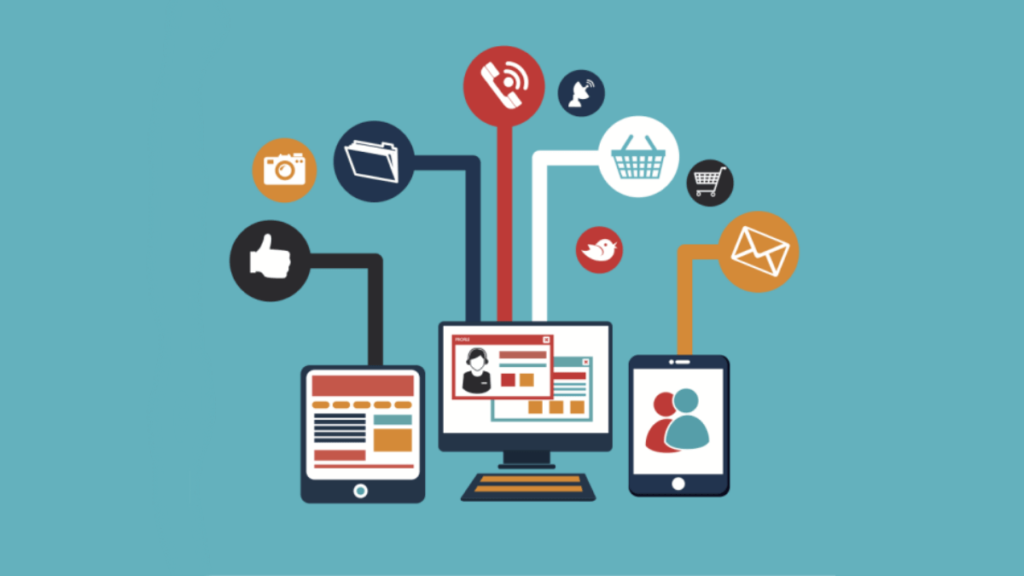
In 2026, tools like Adobe Analytics, Northbeam, and Triple Whale lead, offering AI-driven insights for data-driven attribution and ROI optimization.
Look for multi-touch support, cross-device tracking, and MMM integration. Best for B2B: HubSpot for CRM ties; e-commerce: SegmentStream for funnel visibility.
Table:
| Tool | Best For | Key Features |
|---|---|---|
| Adobe Analytics | Enterprise | Robust MTA, AI models |
| Northbeam | DTC | Transparent data, usability |
| Triple Whale | E-commerce | Pixel tracking, conversions |
Pros: Scalable; cons: Cost for advanced.
Start with trials, integrate existing stacks. Example: Brand using Cometly optimized cross-channel ROAS 25%.
As a user of these, match to your scale for best fit.
Customer journey mapping visualizes paths, enhanced by multi-channel attribution for precise valuation.
Steps: 1. Define personas. 2. Inventory touchpoints. 3. Align with funnels.
Assigns credit, revealing influences. Benefits: 20% engagement lift.
Pros/cons: Comprehensive vs time-intensive.
Example: B2B mapped social to demos, boosting efficiency.
Tip: Use histograms for trends.
This synergy advances to optimization strategies.
Data-driven models analyze paths for dynamic credit, optimizing ROI in 2026’s privacy-focused era.
MTA for digital granularity, MMM for aggregates. Hybrid improves forecasting 15-30%.
Use probabilistic matching for links, enhancing accuracy.
Incorporate AI for patterns. Tip: Monitor signal loss, adapt models.
As an advisor, this drives sustainable growth.
What is the difference between multi-channel attribution and last-click? Multi-channel attribution distributes credit across all touchpoints, while last-click only credits the final one, often missing upper-funnel value.
How does multi-channel attribution improve ROI for B2B? It identifies high-impact channels, allowing budget shifts that can increase conversions by 15-20% and reduce waste.
What are the best multi-channel attribution models for e-commerce? Time-decay and data-driven models work well, emphasizing recent interactions in shorter cycles.
How to handle cross-device tracking in attribution? Use deterministic or probabilistic methods to link devices, ensuring complete journey views.
Is multi-channel attribution better than marketing mix modeling? MTA offers granular digital insights, while MMM provides aggregate overviews; hybrids combine strengths.
What challenges come with implementing multi-channel attribution? Data fragmentation and privacy rules, but centralized platforms mitigate these.
How often should you review attribution data? Quarterly for optimizations, monthly for trends.
Can small teams use advanced attribution software? Yes, user-friendly tools like ThoughtMetric make it accessible without large datasets.
- Multi-channel attribution reveals the full customer journey, helping you allocate budgets wisely and boost efficiency.
- Shift from last-click to avoid undervaluing early touchpoints, potentially saving 15% on spend.
- Implement step-by-step: audit, collect data, test models, and refine for ongoing ROI gains.
- Choose data-driven approaches in 2026 for AI-powered accuracy amid privacy changes.
- Integrate with journey mapping to personalize experiences and drive loyalty.
Embracing multi-channel attribution not only optimizes your marketing spend but transforms guesswork into confident strategies. Try auditing your setup today and share your experiences in the comments, what challenges have you faced?
You May Also Like: The ROI of Healthcare App Development for Dubai Medical Facilities
 Arthur
  Siam
Siam