 By Arthur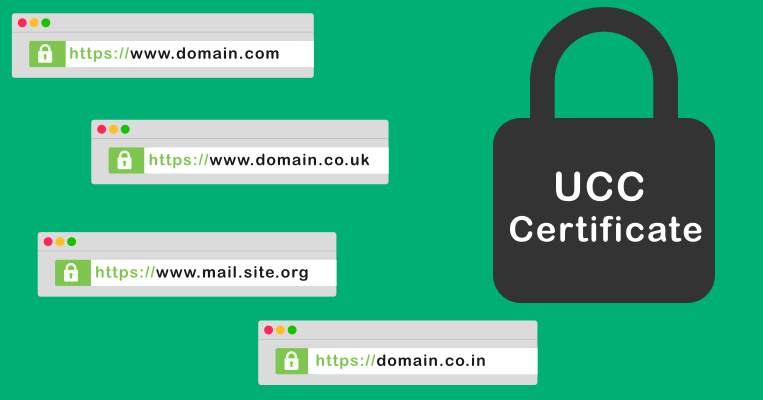
Managing the security of a complex web environment can feel like juggling flaming torches. If your business operates multiple websites, different subdomains, or uses specialized communication servers like Microsoft Exchange, you might think you need a separate digital lock for every single door. Fortunately, there is a more efficient solution designed specifically for this challenge: the UCC certificate.
This guide delves into the specifics of the Unified Communications Certificate. We will explore what makes it different from standard security options, how it simplifies administrative headaches, and why it is the preferred choice for businesses looking to streamline their online security infrastructure.
A UCC certificate (Unified Communications Certificate) is a specialized type of SSL/TLS certificate that allows you to secure multiple domain names and subdomains using a single certificate. Originally designed to support Microsoft Exchange and Microsoft Office Communications Server environments, these certificates have evolved to become a versatile tool for any organization managing a portfolio of web addresses.
You might also hear this type of certificate referred to as a Multi-Domain SSL or a SAN (Subject Alternative Name) certificate. While the names vary, the core function remains the same: it aggregates security. Instead of buying, validating, and installing separate SSL certificates for www.example.com, mail.example.com, and payment.example.net, a single UCC certificate can cover them all simultaneously.
This consolidation is possible because of the “Subject Alternative Name” field within the certificate configuration. Unlike a standard Single Domain SSL that only protects one specific address, a UCC allows you to list multiple diverse paths in the SAN field, extending the same strong 256-bit encryption to every listed endpoint.
Why should a business choose a UCC certificate over buying individual certificates for each site? The advantages generally come down to efficiency, cost, and flexibility.
For IT administrators, managing SSL life cycles is a critical but tedious task. If you have 20 domains, you have 20 expiration dates to track, 20 validation processes to complete, and 20 installation procedures to perform. With a UCC, you undergo the validation process once. You install the certificate on your server once. And most importantly, you only have one renewal date to remember. This drastically reduces the administrative burden and the risk of an expired certificate causing downtime.
Purchasing individual SSL certificates for every subdomain or unique domain extension adds up quickly. A UCC certificate typically allows you to secure up to 100 different domains (depending on the provider) for a single base price. Even with additional costs for extra domains, the total expense is almost always significantly lower than the cumulative cost of single certificates.
Business needs change. You might launch a new product site next month or add a new mail server next quarter. With a standard certificate, you would need to buy a new one from scratch. With a UCC, you can often reissue the certificate to add or remove domains as needed throughout its lifespan without buying a completely new product.
The mechanics of a UCC certificate rely on the SAN extension. When you generate the Certificate Signing Request (CSR) for your provider, you specify a primary domain (the “Common Name”) and then list additional domains as Subject Alternative Names.
Once issued, the certificate covers traffic for all listed names. If a user visits any of the domains listed in the SAN field, their browser checks the certificate, sees the domain is listed as a valid alternative, and establishes a secure, encrypted connection.
- Microsoft Exchange and Lync Servers: This is the original purpose of the UCC certificate. These environments use multiple service addresses (like autodiscover.domain.com, owa.domain.com, and mail.domain.com) that all need to be secured for the system to function correctly without throwing error messages to users.
- Shared Hosting Environments: Web hosts often use UCCs to secure multiple client websites residing on a single IP address.
- QA and Development Environments: Companies often have internal domains for testing (e.g., dev.test.local, staging.app.com). A UCC can easily secure these varied internal and external endpoints.
- Organizations with Multiple TLDs: If your brand owns mybrand.com, mybrand.net, and mybrand.co.uk, a single certificate can protect all of them, ensuring a consistent security posture across your brand presence.
The modern digital landscape is rarely singular. Businesses expand, launch microsites, and utilize complex internal networks. Sticking to a “one certificate per domain” strategy is a legacy approach that scales poorly.
You should consider a UCC certificate if your organization values agility. When you need to spin up a new marketing landing page on a unique domain, a UCC allows you to secure it almost instantly by reissuing your existing certificate. It eliminates the procurement lag time.
Furthermore, it prevents “certificate sprawl.” When an organization has dozens of certificates from different providers expiring at different times, the likelihood of human error increases. An expired certificate results in scary browser warnings that drive customers away immediately. By centralizing your security under one umbrella, you gain better control and visibility over your encryption status.
Digital security does not have to be complicated to be effective. The UCC certificate represents a smart evolution in SSL technology, moving away from rigid, single-use tools toward flexible, multi-purpose solutions.
By consolidating your security needs into one manageable asset, you save money, reduce the workload on your IT team, and ensure that every corner of your digital empire—from your main homepage to your internal mail server—is protected with industry-standard encryption. If you manage more than one domain, the switch to a Unified Communications Certificate is not just a security upgrade; it is an operational upgrade.
You May Also Like: Strengthening Online Privacy in a World of Constant Connectivity
 Siam
Siam  IQnewswire