 By Prime Star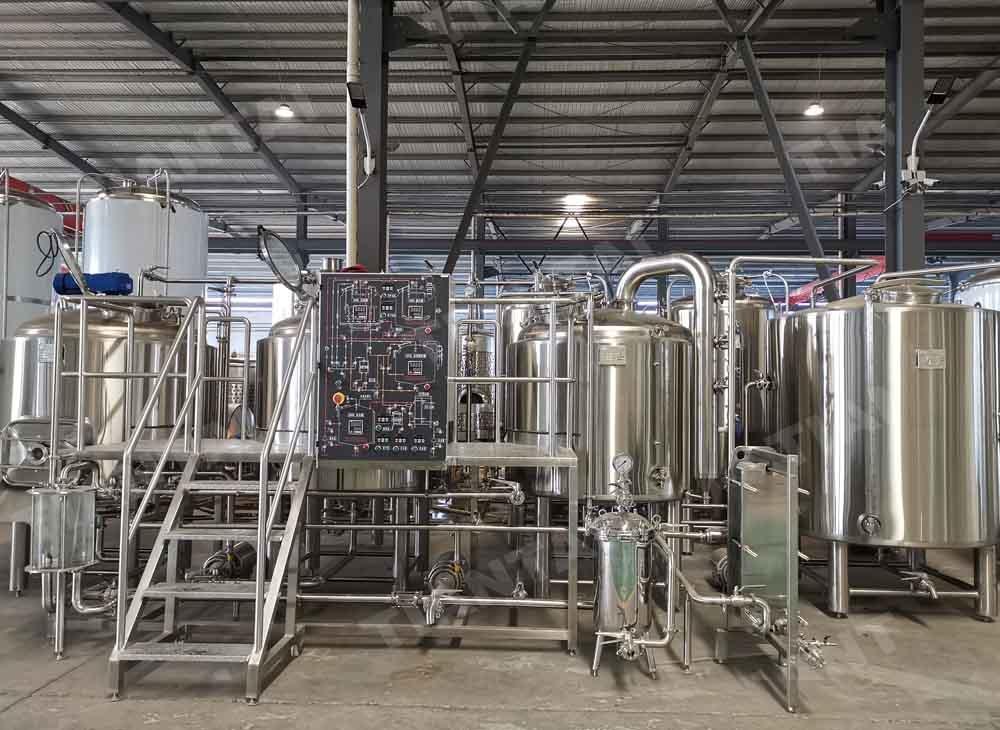
Opening a commercial brewery is a monumental undertaking that blends the precision of science with the soul of artistry. While your recipes are the heart of your brand, your equipment is the engine that drives consistency, efficiency, and scale. Navigating the sea of stainless steel can be overwhelming for even the most seasoned head brewer.
A well-planned equipment list prevents costly bottlenecks and ensures that your facility can grow alongside your customer base. This comprehensive checklist breaks down every essential component required to move from a business plan to your first commercial “knock-out.”
The brewhouse is where the magic begins. This is the collection of vessels where raw ingredients—water, malt, and hops—are transformed into wort. The configuration you choose (2-vessel, 3-vessel, or 4-vessel) will dictate your daily throughput and labor intensity.
Before the grain ever touches water, it must be properly prepared.
- Malt Mill: A high-quality two-roll or three-roll mill is essential. It must crush the endosperm of the grain while keeping the husk intact to act as a natural filter bed during lautering.
- Grist Hopper and Auger: For larger systems, manually lifting 55-lb bags of grain is inefficient. An auger system transports the milled grain from the mill to a hopper situated above the mash tun.
- Flex Auger/Conveyor: Used to move grain from silos or storage areas to the mill.
- Mash Tun: This vessel is where milled grain is mixed with hot water. Look for excellent insulation and precise temperature control to ensure optimal enzyme activity.
- Lauter Tun: Often combined with the mash tun in smaller systems, a dedicated lauter tun features a “false bottom” (v-wire screen) that allows the liquid wort to drain away while retaining the spent grain.
- Rake and Plow System: Essential for larger tuns to break up the grain bed and facilitate the “grain out” process after the brew is finished.
- Brew Kettle: Where the wort is boiled and hops are added. It requires a powerful heat source—steam jackets are the gold standard for commercial consistency, though direct fire or electric elements are common in smaller setups.
- Whirlpool Vessel: After the boil, the wort is spun to create a vortex, settling hop particles and proteins (trub) into a cone in the center. This allows for the collection of clear wort.
- Wort Heat Exchanger: A plate heat exchanger (PHE) is used to rapidly cool the boiling wort to fermentation temperatures (typically $18\text{–}20^\circ\text{C}$ for ales or $10\text{–}12^\circ\text{C}$ for lagers).
Once the wort is cooled and oxygenated, it moves to the “cold side.” This is where the yeast turns your sugar water into beer. Hygiene and temperature control are the two most critical factors here.
Modern breweries almost exclusively use Unitanks. These are cylindroconical vessels that allow for both fermentation and carbonation in the same tank.
- Glycol Jackets: Double-walled construction allows chilled glycol to circulate, maintaining the precise temperature needed for different yeast strains.
- Pressure Rating: Ensure your tanks are rated for at least 15–30 PSI to allow for pressurized fermentation and carbonation.
- Sample Valves and Carbonation Stones: For monitoring gravity and injecting $CO_2$.
- Brite Beer Tanks (BBTs): While Unitanks can do it all, Brite tanks are specialized for clarifying and holding beer before packaging. They have a flat or dished bottom, making them more efficient for carbonation and serving.
- Horizontal Lagering Tanks: If you plan on producing traditional German-style lagers, horizontal tanks provide more surface area for yeast to settle, leading to a crisper finish.
- Yeast Brink: A small stainless steel vessel used for harvesting, storing, and re-pitching yeast from one batch to the next.
- Yeast Propagation System: For larger breweries, this allows you to grow your own yeast cultures from a laboratory sample, significantly reducing ingredient costs over time.
Utilities are the unsung heroes of the brewery. You cannot brew without heat, cooling, and water. These systems often represent a significant portion of the initial capital expenditure.
- Steam Boiler: Most commercial breweries above 10 BBLs use a steam boiler. It provides even, scorched-free heating for the kettles and can be used for sterilization.
- Hot Liquor Tank (HLT): This is a large insulated tank used to store hot water for mashing and sparging. It is usually sized 2x larger than your brewhouse capacity.
- Glycol Chiller: A refrigeration unit that cools a mixture of water and propylene glycol. This “coolant” is pumped through the jackets of your fermentation and Brite tanks.
- Cold Liquor Tank (CLT): Used to store chilled water, which is then used in the heat exchanger to crash the wort temperature during the transfer from the brewhouse to the fermenters.
- Carbon Filtration: To remove chlorine and chloramines, which can cause “medicinal” off-flavors.
- Reverse Osmosis (RO) System: Essential if your local water profile is inconsistent or overly high in specific minerals. RO allows you to build a “blank canvas” for any beer style.
Getting the beer into the customer’s hand requires specialized equipment that preserves the quality you worked so hard to create in the cellar.
- Canning/Bottling Line: Automated or semi-automated lines that purge the container with $CO_2$, fill it, and seal it. Minimizing “Dissolved Oxygen” (DO) during this stage is the difference between a beer that lasts six months and one that tastes like cardboard in two weeks.
- Labeling Machine: To apply your branding to the finished product.
- Keg Washer: A dedicated machine to clean and sanitize used kegs. Clean kegs are non-negotiable for food safety and flavor.
- Hydrometers and Refractometers: To measure sugar content (gravity).
- pH Meter: To monitor the acidity of the mash and finished beer.
- Dissolved Oxygen (DO) Meter: Perhaps the most expensive but vital tool for breweries looking to distribute.
- Microscope and Hemocytometer: For counting yeast cells and checking for bacterial contamination.
In the brewing world, you are 90% a glorified janitor and 10% a brewer. Contamination is the number one killer of new breweries.
 Arthur