 By Arthur
Choosing a truck, SUV, or commercial vehicle is easier when you begin with the work it must do instead of the badge, trim level, or monthly payment. A vehicle may need to handle commuting, children, tools, home projects, road trips, and trailer duty in the same week. For a useful starting point while comparing vehicle types and capabilities, learn more about the options available in this category, then narrow the search based on your real routine.
The best choice is usually not the largest or most powerful vehicle on the lot. It is the one that meets your regular needs safely, comfortably, and affordably, with enough extra capability for the conditions you actually expect to encounter.
A family may need comfortable rear seating and an enclosed space for backpacks during the week, then use the same vehicle for a camper, boat, mulch, or renovation supplies on weekends. That combination makes the decision more complicated. A roomy SUV can be excellent for passengers and weather-protected cargo, while a pickup may be better for dirty materials and frequent trailer use. The goal is to buy for common needs, not for one unlikely task that occurs every few years.
Before comparing models, create a short use-case list. Note the usual passenger count, the cargo carried in a normal week, and whether an open bed is truly necessary. Record the loaded weight of any trailer, not only its empty weight. Also consider where the vehicle will spend most of its time, including city streets, highways, worksites, rural roads, steep grades, or winter conditions. This simple exercise prevents shoppers from paying for capabilities they will rarely use or overlooking a requirement that matters every day.
A truck is often the practical answer for regular hauling of tools, lumber, landscaping supplies, motorcycles, or equipment that is awkward to place inside a cabin. An open bed also makes cleanup easier after muddy, wet, or dusty jobs. Pickups can be especially useful for frequent towing, but cab style, bed length, engine, axle ratio, and installed towing equipment can substantially change their ratings.
An SUV is often the stronger fit for people who regularly carry passengers, pets, groceries, sports gear, or luggage that should remain enclosed. It can offer flexible seating, easier access to the rear cargo area, and a more family-focused cabin without requiring the footprint of a heavy-duty truck. Compare the cargo room behind each row, because total cargo volume can be misleading when all seats are occupied.
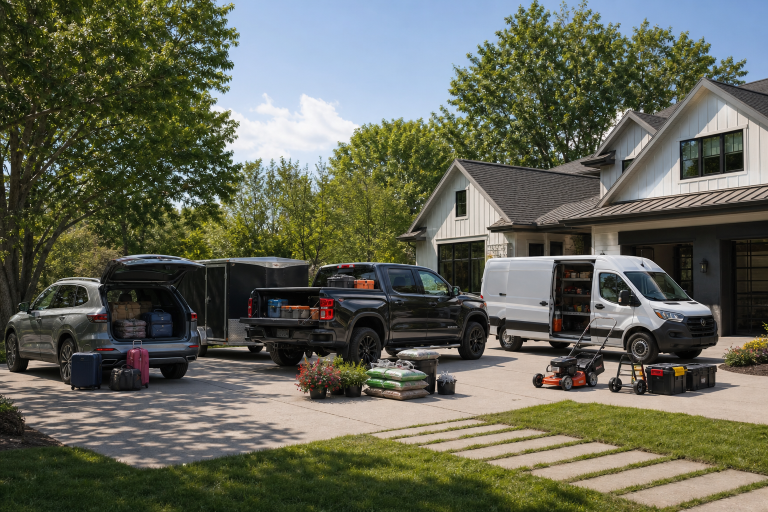
A commercial vehicle deserves consideration when business use is daily and demanding. Multiple workers, specialized storage, deliveries, equipment, or high payload needs may justify a van, chassis cab, or work-focused truck. Access to tools, visibility around the vehicle, upfit options, service scheduling, and downtime can matter as much as horsepower.
Never compare a vehicle only by its maximum towing claim. Trailer weight changes once propane, water, batteries, cargo, and personal gear are added. You also need to account for tongue weight, passengers, hitch hardware, tools, and luggage because they consume payload. Review the specific vehicle’s certification label and owner’s manual for gross vehicle weight rating and gross combined weight rating, rather than assuming every version of a model is rated the same.
Extra capacity can make towing more controlled when roads are hilly, temperatures are high, or the cabin is full. Trailer preparation matters too. Following safe load-securing practices means using appropriate straps or tie-downs, balancing the load, and checking it again before travel. A capable vehicle cannot compensate for cargo that shifts, falls, or overloads the trailer.
Payload is the amount of weight the vehicle can carry, including people and cargo, so it can become the limiting number before towing capacity does. A short bed is easier to park, while a standard or long bed may better fit equipment and building materials. Crew cabs provide more usable rear-seat room, but may reduce bed length. In an SUV, measure large child seats, pet crates, coolers, work cases, and other items you carry often.
Gasoline engines often suit mixed commuting, occasional towing, and straightforward ownership. Diesel engines can provide strong, low-speed pulling power for regular heavy loads, though purchase and maintenance costs may be higher. Hybrid and electric options can reduce energy use in the right driving pattern, but shoppers should consider charging access, route length, payload, and how towing affects range. Compare operating costs using EPA fuel economy information, while remembering that weather, speed, cargo, driving style, and maintenance affect real-world results.
A vehicle should feel manageable on ordinary errands, not only impressive on a spec sheet. Check seat height, steering-wheel reach, mirror coverage, step-in height, rear-seat access, and how easily cargo can be loaded. Useful features may include a surround-view camera, trailer guidance, blind-spot alerts, parking sensors, and adaptive cruise control. Test the vehicle in the parking situations and road conditions that are part of your normal life.
The purchase price is only one part of the decision. Build a realistic budget that includes loan interest, insurance, fuel or charging, tires, brakes, fluids, scheduled maintenance, registration, taxes, accessories, and towing equipment. Also consider depreciation and expected resale value. A less expensive vehicle can cost more over time if it uses significantly more fuel, requires costly repairs, or does not fit your needs well enough to keep long-term.
New vehicles offer full warranty coverage, newer safety technology, and more control over cab, bed, powertrain, and seating choices. Used vehicles can lower the purchase price and broaden the selection within a fixed budget. For any used truck or SUV, review the vehicle history report, service records, tire and brake condition, and signs of frame, water, accident, commercial, or heavy towing use. An independent inspection is a sensible final step.
- Choosing only by exterior appearance or a low monthly payment.
- Ignoring payload after passengers, equipment, and hitch weight are added.
- Assuming every trim has identical towing and cargo ratings.
- Buying an excessive size that is difficult to park, fuel, and insure.
- Skipping a test drive with family members, car seats, or typical cargo.
- Write down the vehicle’s three most important jobs.
- Calculate the normal payload and the largest loaded trailer weight.
- Remove options that cannot safely meet those requirements.
- Compare remaining choices for ownership costs, comfort, and visibility.
- Choose the vehicle that handles real life without excessive unused capacity.
The right truck or SUV should be capable on workdays, comfortable for family use, and dependable when towing or hauling is required. By checking payload, trailer weight, space, powertrain, daily drivability, and long-term costs together, you can make a decision that remains practical well beyond the purchase day.