 By Arthur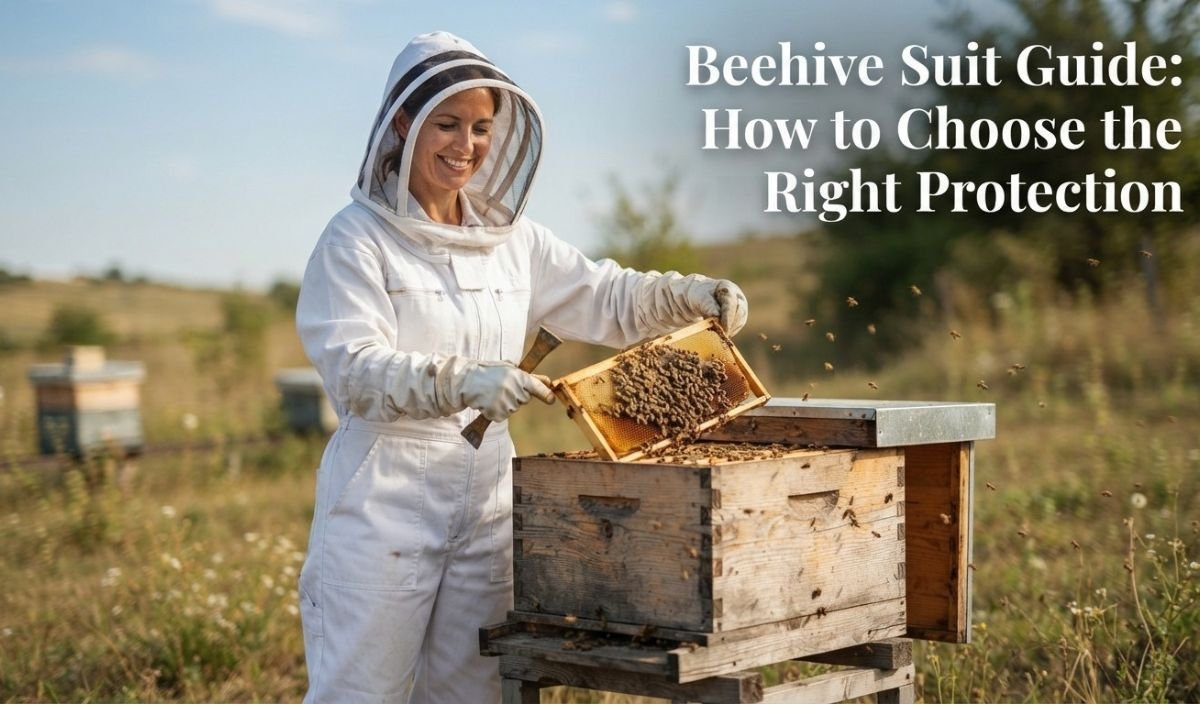
Every beekeeper, whether tending a single backyard hive or managing dozens of colonies, faces the same first decision: what to wear before opening a hive. Every beekeeper faces the same first decision before opening a hive: what to wear. A beehive suit is the barrier between a calm inspection and a painful afternoon. Picking the wrong one means overheating, restricted movement, or gaps that expose your skin. Getting this one piece of gear right shapes the entire beekeeping experience.
This guide, brought to you by BeBees, breaks down everything you need before buying. We’ll explain what a beehive suit actually does and why full coverage matters. You’ll learn the real differences between cotton, polycotton, and ventilated mesh. We’ll also cover how to match a suit to your climate, experience, and budget. By the end, choosing the right suit will feel simple, not overwhelming.
A beehive suit is a full-body protective garment designed to shield beekeepers from stings while allowing enough mobility to work a hive comfortably. Unlike a simple jacket or veil, a full suit covers the legs, torso, arms, and head in one connected piece — or as a two-piece jacket-and-trouser combination — eliminating the gaps where bees tend to find their way in.
For new beekeepers especially, a properly fitted suit isn’t optional gear; it’s the foundation that makes learning hive management possible without fear. Experienced keepers often develop a tolerance for the occasional sting, but beginners benefit enormously from full coverage while they build confidence around an active colony.
The best suits balance three things: sting protection, breathability, and freedom of movement. Sacrificing any one of these tends to create problems — too much armor and you overheat during a long inspection; too little coverage and you risk stings at the wrists, ankles, or neckline.
Fabric choice is where most buying decisions actually get made, since it determines comfort, durability, and price more than any other factor.
A cotton bee suit is the traditional choice, and for good reason. Cotton is breathable, machine washable, and holds up to years of regular use without breaking down. It’s typically the most affordable entry point into beekeeping gear, making it a sensible pick for hobbyists who are just starting out or keepers working in milder climates where heat buildup isn’t a constant concern.
The trade-off is airflow. Cotton doesn’t ventilate as aggressively as mesh-based alternatives, so on hot summer days or during longer inspections, a cotton suit can feel warm. Many keepers in temperate regions find this a non-issue, while those in consistently hot climates lean toward ventilated options instead.
Sitting between cotton and full ventilation, polycotton blends combine durability with semi-vented panels for improved airflow. They resist wear better than pure cotton and suit keepers who want a middle ground — tougher fabric without the higher price tag of a fully ventilated suit.
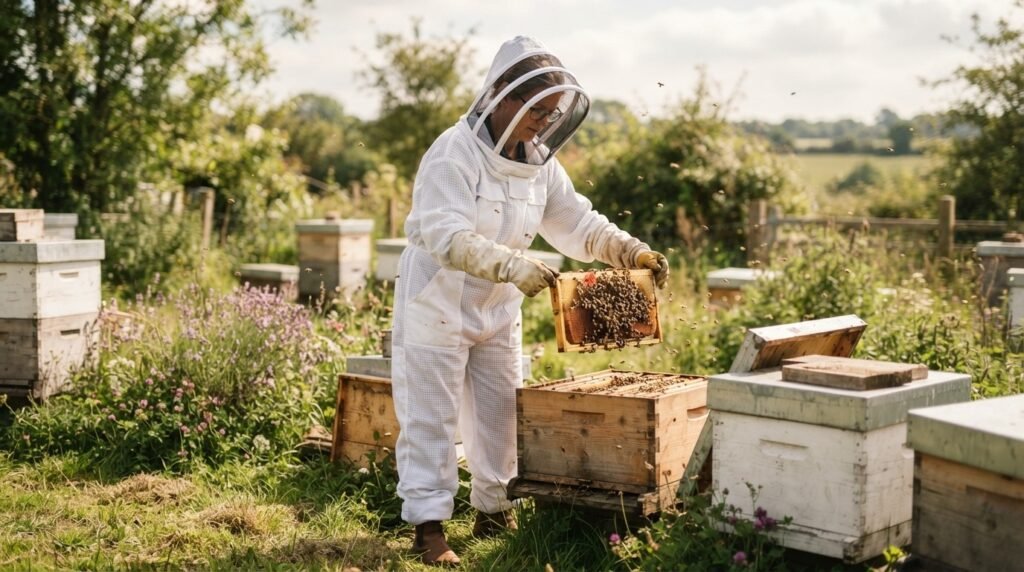
For hot climates or extended hive work, a three-layer mesh suit is generally the top recommendation. The layered mesh construction keeps a gap between the fabric and skin, which does two things: it improves airflow dramatically and adds an extra buffer against stings, since a bee’s stinger typically can’t reach skin through the spaced layers. These suits cost more but pay off during long summer sessions when comfort directly affects how thoroughly you can inspect a colony.
Climate: Hot, humid regions favor ventilated mesh. Cooler or mild climates make cotton or polycotton perfectly workable, and often more comfortable overall since there’s less mesh bulk.
Frequency of use: Keepers who inspect hives weekly or manage multiple colonies benefit from investing in a higher-durability suit, whether that’s ventilated mesh or a reinforced polycotton blend. Occasional or seasonal beekeepers may find a standard cotton suit does everything they need.
Sizing: Off-the-rack sizing (often ranging from XXS to 5XL) works for most people, but gaps at the wrists, ankles, or hood are the most common source of stings. Suits built to exact measurements remove that guesswork entirely, sealing off the areas where standard sizing tends to fall short.
Who’s wearing it: Youth and toddler-sized suits exist specifically because scaled-down adult gear rarely fits properly. A child in an oversized suit has loose fabric at the cuffs and hood — exactly where stings happen.
Beyond fabric, a handful of design details separate a well-made suit from a frustrating one:
- Elastic cuffs and ankle closures that seal tightly against gloves and boots
- A detachable or fencing-style veil with rigid mesh that keeps fabric away from the face
- Reinforced stitching at stress points like the crotch and underarms, where suits typically fail first
- Ample pockets for a hive tool, smoker matches, or a phone
- A full front zipper for easy on/off, ideally with a storm flap covering the zipper teeth
A suit missing any of these tends to underperform regardless of how good the base fabric is.
Two buying paths exist for beekeeping suits, and each serves a different need.
Ready-to-ship suits in standard sizing get you geared up fast typically the right call for beginners who want to start working a hive within days rather than weeks. Custom-fit suits, built to exact measurements, take longer to produce but eliminate the loose fabric and gaps that off-the-rack sizing can’t always avoid. Manufacturers who sew their own suits rather than reselling stock from third parties are usually the ones able to offer true custom sizing, since they control the cutting and construction process directly.
BeBees is one example of a manufacturer taking this direct-production approach, cutting suits to individual measurements rather than relying on standard S-M-L sizing. That kind of manufacturer-direct model tends to keep pricing more reasonable too, since there’s no reseller markup built into the cost.
A beehive suit is an investment, and proper care extends its lifespan considerably:
- Shake out propolis and wax residue after each use before it hardens
- Machine wash cotton and polycotton suits in cold water to preserve elastic and stitching
- Air dry rather than tumble dry to prevent shrinkage or mesh damage
- Inspect zippers, cuffs, and veil seams periodically for wear before it becomes a gap
What is a beehive suit used for? It protects beekeepers from stings during hive inspections, honey harvesting, and general colony maintenance by covering the full body in sting-resistant fabric.
How much does a beehive suit cost? Prices typically range from around $100 to $160, depending on fabric type, ventilation level, and whether the suit is custom-fitted.
What fabric is best for a bee suit? It depends on climate: cotton suits work well in cooler regions and for occasional use, while ventilated mesh suits perform better in hot climates or during long inspections.
Do beekeepers need a full suit, or is a jacket enough? Beginners and anyone working aggressive colonies benefit from full-body coverage. Experienced keepers working calm hives sometimes downgrade to a jacket-and-veil combination for quicker, low-risk visits.
Choosing a beehive suit comes down to matching fabric and fit to how and where you actually keep bees. A cotton bee suit suits budget-conscious beginners and cooler climates, while ventilated mesh earns its higher price tag in hot-weather, high-frequency use. Whichever route you take, prioritize a snug, gap-free fit over anything else it’s the single factor that determines whether a suit actually does its job in the moment that matters.
 Siam
Siam